


Packing Table vs Workbench: What’s the Difference — and Which Is Better for Warehouse Shipping Stations?
In warehouse and fulfillment operations, few purchasing decisions seem simple—but choosing between a packing table and a workbench is one of the most misunderstood. Many buyers assume the two are interchangeable. Others default to the cheapest option or reuse existing tables, only to discover bottlenecks, safety issues, or premature equipment failure.
This guide breaks down the real differences between packing tables and workbenches, how each performs in warehouse shipping stations, and how procurement managers, warehouse supervisors, and operations teams can choose the right solution for speed, durability, and long-term cost control.
Why This Question Comes Up So Often in Warehouses
Search terms like “packing table vs workbench,” “warehouse packing table,” and “best table for shipping station” continue to trend upward. The reason is simple: modern warehouses rarely operate in a single-function environment.
Shipping stations now handle:
- Packing and labeling
- Light assembly or kitting
- Returns processing
- Quality checks
When workflows overlap, buyers naturally ask: Do we need a dedicated packing table, or will a workbench do the job better?
What Is a Packing Table?
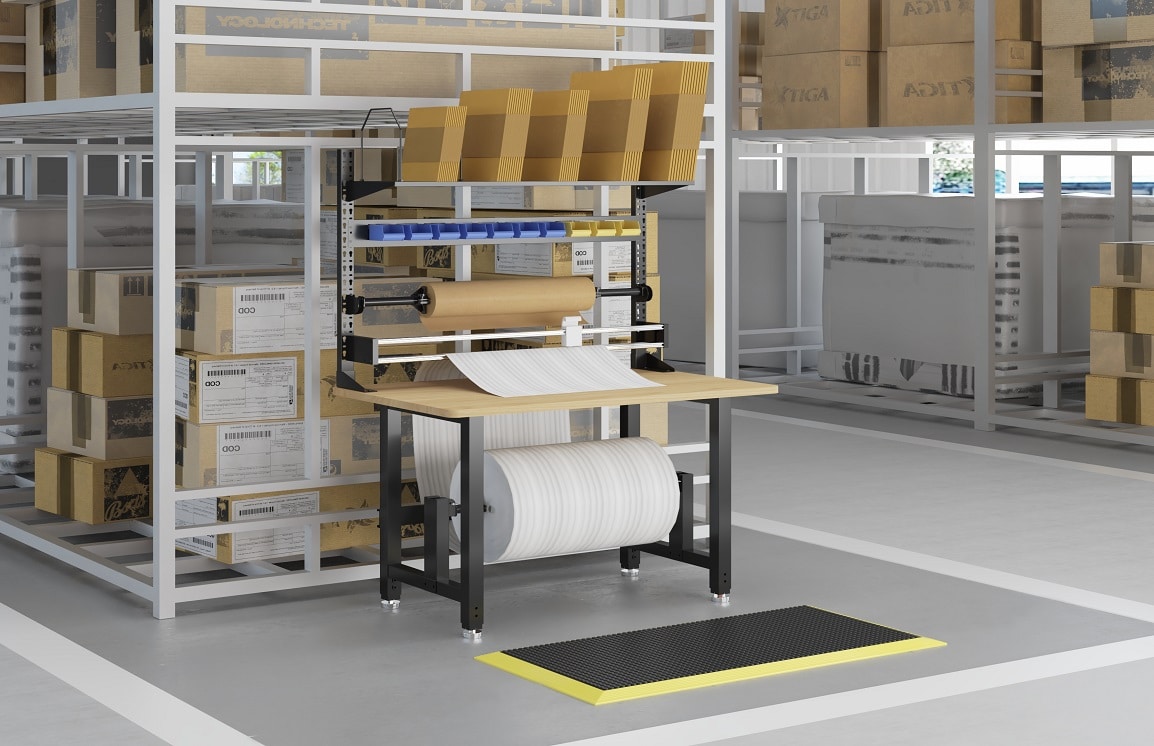
A packing table is designed primarily for speed and repetition. Its job is to support high-frequency packing tasks where operators handle cartons, tape, labels, and stretch wrap all day.
Typical characteristics include:
- Moderate load capacity (sufficient for cartons, not machinery)
- Open leg design for easy movement
- Compatibility with accessories like tape dispensers, shelves, and roll holders
- Optimized working height for standing tasks
Packing tables excel in:
- E-commerce fulfillment
- 3PL shipping lines
- Small to mid-size parcel operations
A good example is the WB3RB heavy-duty packing table, often used in home warehouses and small shipping areas because it balances cost, stability, and footprint: View WB3RB packing table.
What Is a Workbench?
A workbench prioritizes strength and stability over speed. It is built to handle heavier loads, tools, and more varied tasks.
Core features usually include:
- Higher load ratings
- Thicker tabletops
- Reinforced steel frames
- Optional drawers, shelves, or cabinets
Workbenches are commonly used for:
- Assembly and kitting
- Repair and maintenance
- Heavy or irregular packaging tasks
In shipping environments, workbenches often appear where packages are bulky, heavy, or where packing overlaps with inspection or light assembly.
Packing Table vs Workbench: Key Differences That Matter
The real difference is not the name, but the intended workload.
- Speed vs Stability: Packing tables optimize throughput. Workbenches optimize structural rigidity.
- Load Capacity: Packing tables support cartons and supplies. Workbenches handle tools, parts, and heavier loads.
- Accessories: Packing tables favor workflow accessories (wrap, tape, bins). Workbenches favor storage and organization.
- Cost Structure: Packing tables are often more cost-efficient for pure shipping tasks. Workbenches cost more but reduce failure risk in heavier-duty applications.
Real Warehouse Use Cases: Which One Works Better?
High-Volume Shipping Stations
In fast-paced shipping lines, packing tables outperform workbenches. Their open layouts reduce operator movement, and accessories can be positioned for one-touch efficiency.
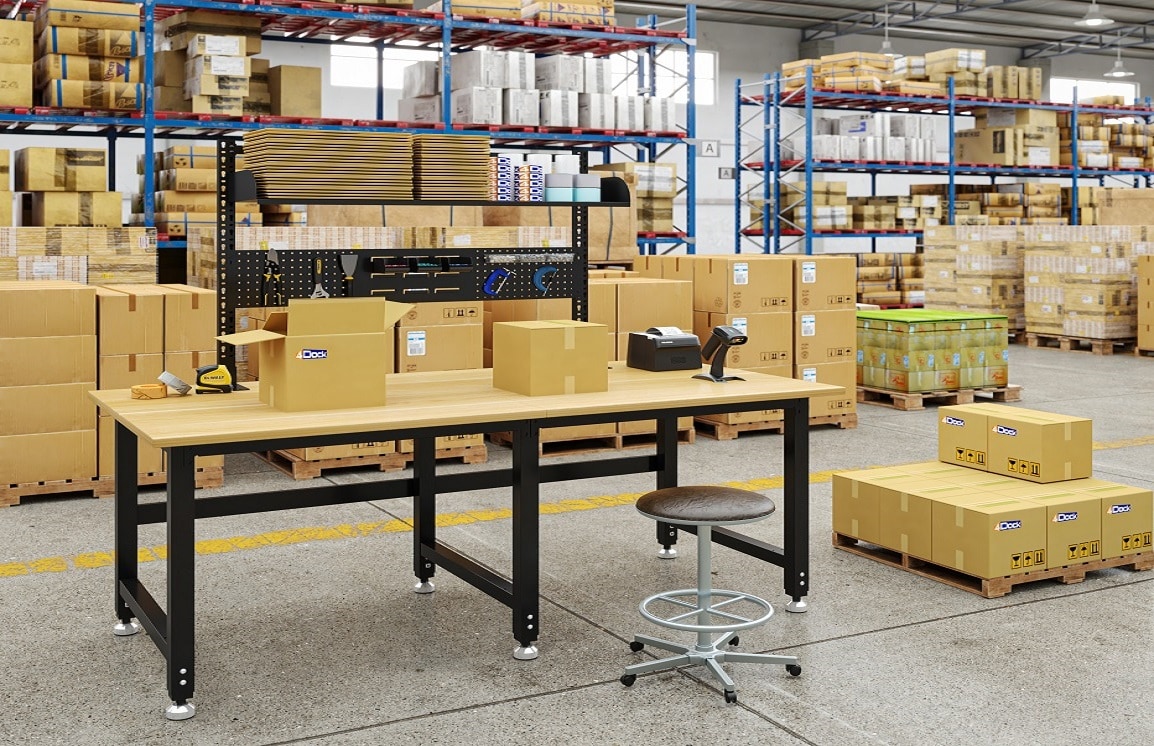
For operations needing more surface area without overspending, a high-value heavy-duty table like the WB5 series is often selected: View the WB5 72" x 36" workbench.
Mixed Packing + Light Assembly
When shipping stations also handle kitting, labeling, or inspection, many warehouses shift toward hybrid solutions—tables that look like packing tables but are built like workbenches.
An adjustable industrial model with optional shelving provides flexibility for both tasks: View the adjustable 90" x 36" table with optional shelf.
(1)_20251229_xfBYZlQY.png "90 x 36 Heavy-Duty Workbench & Packing Table with Particle Board Lower Shelf in Warehouse_4Dock(1)(1).png")
Space-Constrained Warehouses
In smaller facilities, one table often must serve multiple roles. In these cases, durability becomes more important than pure speed. A reinforced workbench reduces wobble, noise, and long-term maintenance issues.
What Buyers Actually Care About
Across e-commerce reviews and warehouse forums, several themes appear repeatedly:
- “Cheap tables wobble under daily use.”
- “Advertised load capacity doesn’t match real performance.”
- “Accessories matter more than the table itself.”
- “Assembly time affects labor costs.”
These insights explain why buyers increasingly search for “heavy-duty packing table” rather than basic packing benches.
How to Choose the Right Table for Your Shipping Station
When making a purchasing decision, warehouse buyers should evaluate:
- Package Weight & Size: If packages routinely exceed 50–70 lbs or require tools, lean toward a workbench.
- Daily Throughput: High-volume shipping favors packing tables with workflow accessories.
- Operator Ergonomics: Adjustable height or proper table depth reduces fatigue and injury risk.
- Accessory Compatibility: Shelves, pegboards, roll holders, and bins directly affect productivity.
- Long-Term Cost: A slightly higher upfront cost often prevents replacement and downtime later.
Can One Table Do Both?
Yes—but only if designed correctly. Many warehouses adopt workstation combo systems that blend packing and assembly functions into a single modular setup: Explore workstation combos.
These systems allow teams to reconfigure layouts as order profiles change, making them attractive for growing operations.
Final Verdict: Which Is Better for Warehouse Shipping Stations?
There is no universal winner.
- Choose a packing table if speed, repetition, and lightweight parcels dominate your workflow.
- Choose a workbench if stability, versatility, or heavier tasks are part of daily operations.
- Choose a hybrid or combo workstation if your shipping station handles multiple roles.
For many warehouses, the smartest decision is not choosing one over the other—but selecting the right tool for the job and building shipping stations around how work actually happens.
Want to explore a full range of industrial-grade options? Start here: Browse 4Dock workstations.