


In most warehouses, forklifts and pedestrians must share space—at least sometimes. And those “shared moments” (crossing an aisle, stepping out from a pick face, walking past a dock door) are where many near-misses and struck-by incidents start.
The good news: forklift–pedestrian safety improves fastest when you treat it like a traffic-engineering problem, not just a “be careful” reminder. That means designing routes, controlling speeds, improving visibility, standardizing right-of-way rules, and reinforcing behavior through training and supervision.
Key principle: The most effective controls reduce or eliminate interaction points—by physically separating people and vehicles whenever feasible. This approach is emphasized in OSHA guidance for powered industrial trucks and in workplace transport best practices.
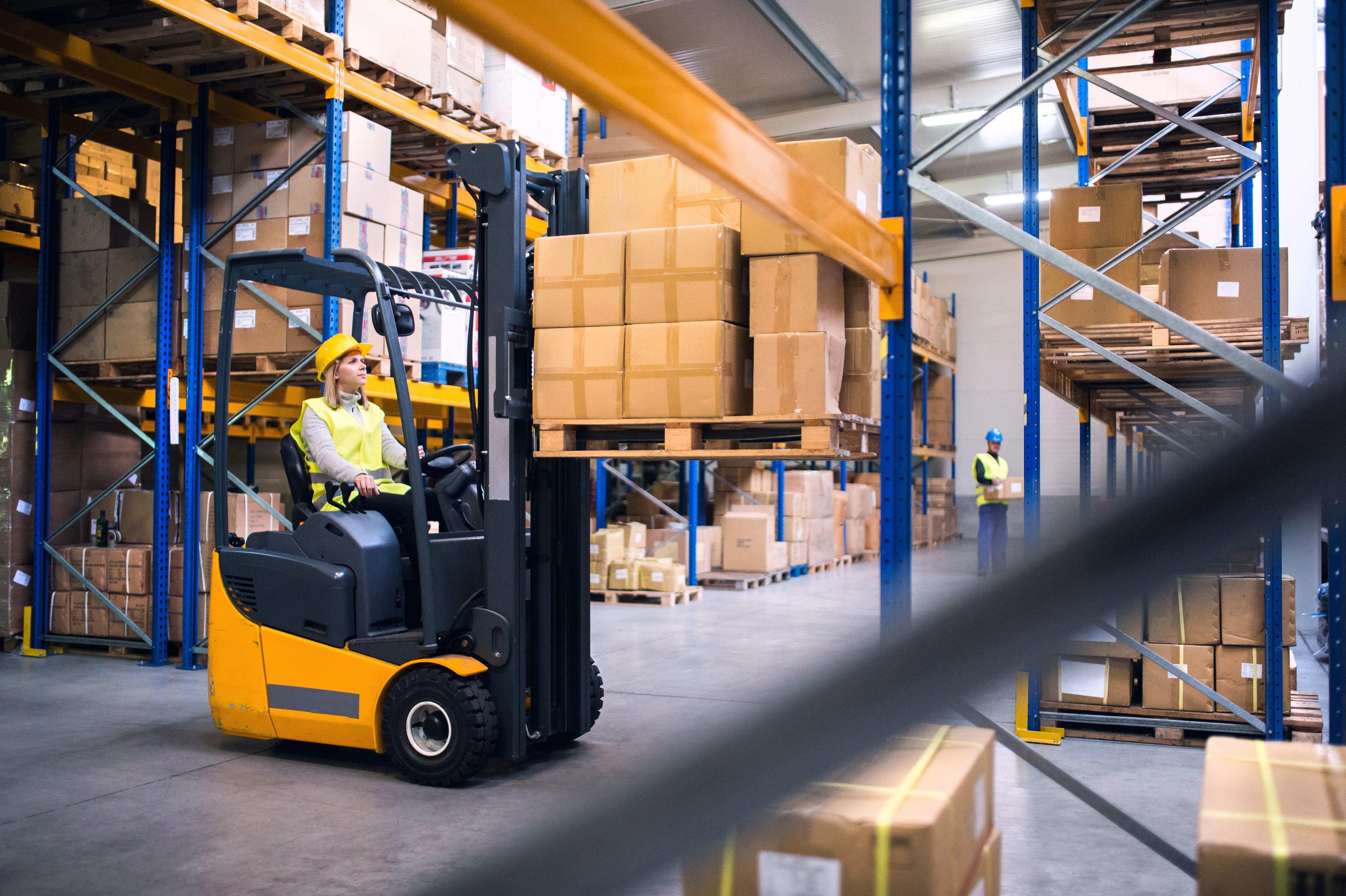
1. Start with a Traffic Map (Not a Policy)
Before buying equipment or adding new signs, run a simple “traffic map” exercise:
- Mark vehicle routes: receiving → storage → production → shipping.
- Mark pedestrian desire lines: where people naturally walk (restrooms, break room, QA, pick stations).
- Highlight interaction points: crossings, blind corners, dock doors, battery charging zones, and staging areas.
- Rank hotspots by frequency (how often) and severity (what happens if it goes wrong).
This mirrors what many safety authorities recommend: routes should match natural “desire lines” so people actually use them, and separation should be built into the layout wherever reasonable.
2. Segregate People and Forklifts (Best ROI Safety Upgrade)
If you do only one thing this quarter: separate pedestrian walkways from forklift aisles. OSHA specifically points employers to marking aisles/passageways and considering pedestrian walkways and protective barriers where mechanical handling equipment is used.
Practical segregation options (from fastest to most robust)
- Floor markings + designated walk lanes (quick win): high-contrast lines, arrows, “NO PEDESTRIANS” zones.
- Controlled crossing points: zebra crossings, stop bars, and “look both ways” prompts.
- Physical barriers: guardrails, bollards, swing gates, and pedestrian safety gates (best protection).
- One-way forklift aisles: reduce head-on conflicts and simplify pedestrian scanning.
Need quick lane-marking and traffic cues? Start with simple, high-visibility materials: Explore: Floor Signs & Safety Marking | Traffic Safety | All Safety Products
Tip: Prioritize intersections, dock approaches, and tight pick aisles first—those are typically the highest interaction density zones.
3. Control Speed and Right-of-Way (Make “Slow” Non-Negotiable)
Many forklift–pedestrian events are less about “not seeing” and more about “not stopping in time.” That’s why consistent speed control and intersection rules matter.
What to implement
- Site-wide speed limits with lower limits at intersections, dock doors, and pedestrian crossings.
- Mandatory stop points (like a roadway): stop bars, “STOP” floor signs, and mirrors at blind corners.
- Audible/visual warnings at cross-aisles and blind spots (horn, strobes, warning lights) aligned with common operating guidance.
- Right-of-way clarity: define who yields, when, and how; then train and enforce it consistently.
OSHA’s powered industrial truck guidance emphasizes separating pedestrian and forklift traffic and using established pedestrian walkways with guardrails. OSHA’s standard for powered industrial trucks (29 CFR 1910.178) sets the regulatory baseline for safe operation and training.
4. Fix Visibility: Lighting, Mirrors, and “Be Seen” Gear
Visibility is a system problem. Even a great operator can’t react to what they can’t see—especially with loads that block forward view or in aisles with racking blind spots.
High-impact visibility upgrades
- Convex mirrors at blind corners and cross-aisles (keep them clean and correctly angled).
- Improve lighting in intersections, dock approaches, and pedestrian doors.
- High-visibility PPE for pedestrians working near vehicle traffic (vests, reflective striping).
- Reduce visual clutter: remove pallet overhangs, shrink-wrap tails, and staged items that block sightlines.
Upgrade pedestrian visibility fast:Shop: PPE (Hi-Vis Vests & More) | Facility Safety
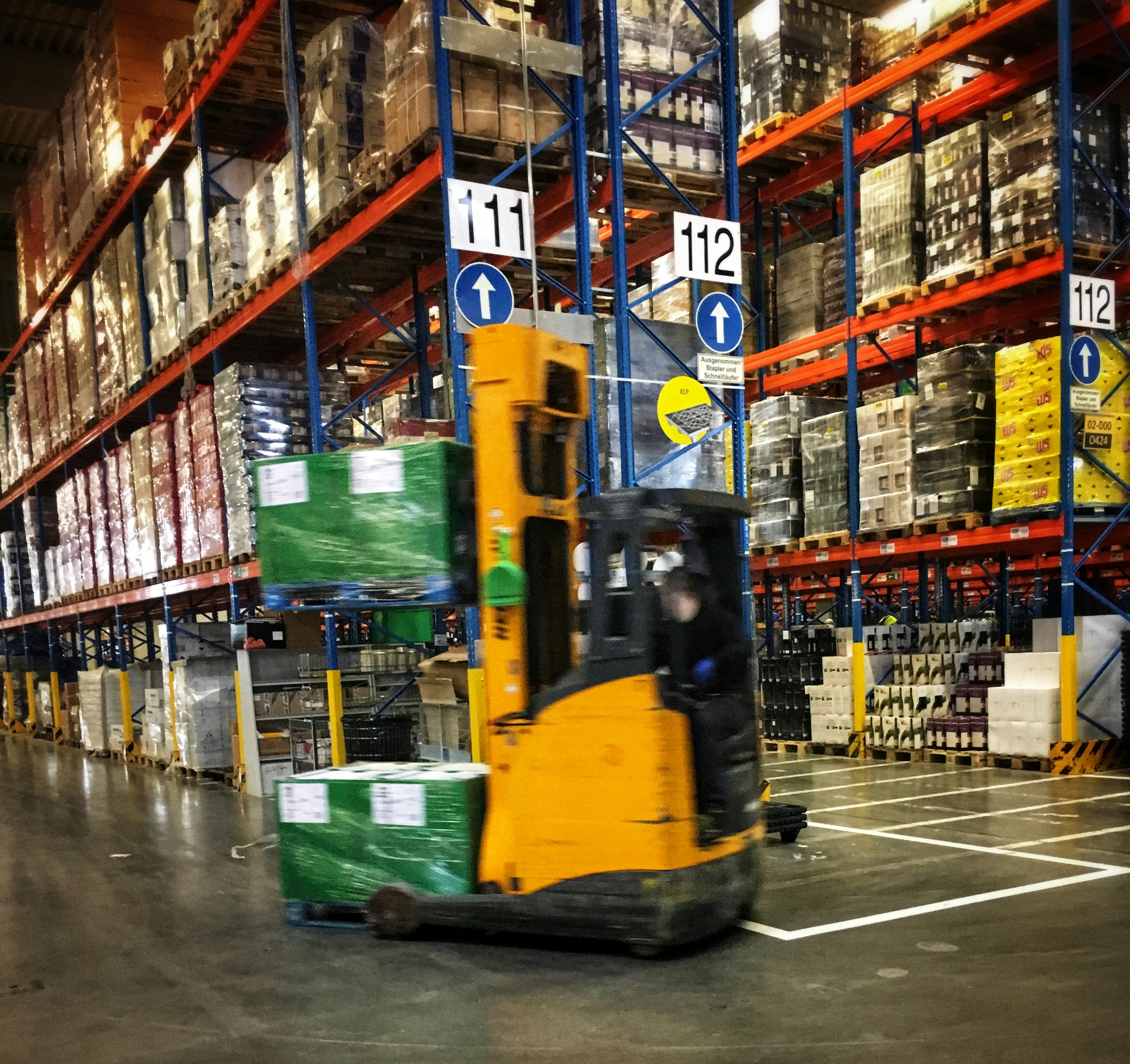
5. Train Both Groups (Not Just Forklift Operators)
A common failure mode: the forklift drivers are trained, but pedestrians are not. In reality, pedestrians create risk too: stepping into aisles without eye contact, walking while using a phone, cutting through staging zones, or assuming a driver saw them.
NIOSH documented multiple fatal incidents involving workers operating or working near forklifts and emphasizes that many deaths could be prevented with proper procedures, equipment, and adherence to OSHA standards.
Training topics to cover:
- Pedestrian rules: stay in walkways, use crossings, no phones/headphones in shared zones, never walk behind a forklift.
- Communication: eye contact, hand signals, “stop-and-confirm” at crossings.
- Operator rules: slow at intersections, horn use at blind spots, maintain safe following distance.
- Visitor protocol: escorts, hi-vis requirement, restricted paths.
6. Add Smart Controls Where Humans Struggle
In fast-paced operations, even strong procedures can fail under pressure. That’s where technology helps—especially in: blind corners, high-noise zones, and mixed-traffic areas that cannot be fully segregated.
Examples of safety tech that reduces near-misses
- Proximity detection / pedestrian alert systems (tag-based or vision-based): alerts driver and pedestrian when too close.
- Blue/spot warning lights: project a visible light spot ahead/behind the forklift to signal approach.
- Speed zoning: automatic speed reduction in geofenced high-risk areas (intersections, docks).
- Access control: gates that force pedestrians to pause and look before crossing.
Technology should support—not replace—segregation and training. If the layout invites conflict, sensors become “alarm fatigue” quickly.
7. Run a Monthly “Near-Miss to Fix” Loop
Safety improves fastest when near-misses are treated as actionable data, not blame. Create a simple loop:
Near-miss improvement loop (30 minutes / month)
- Collect 5–10 near-miss notes (anonymous OK): where, when, what happened.
- Tag each to a hotspot on your traffic map.
- Pick the top 1–2 hotspots and implement a control (marking, mirror, barrier, speed sign, new crossing).
- Re-check that zone in 2 weeks: did behavior change? Is compliance realistic?
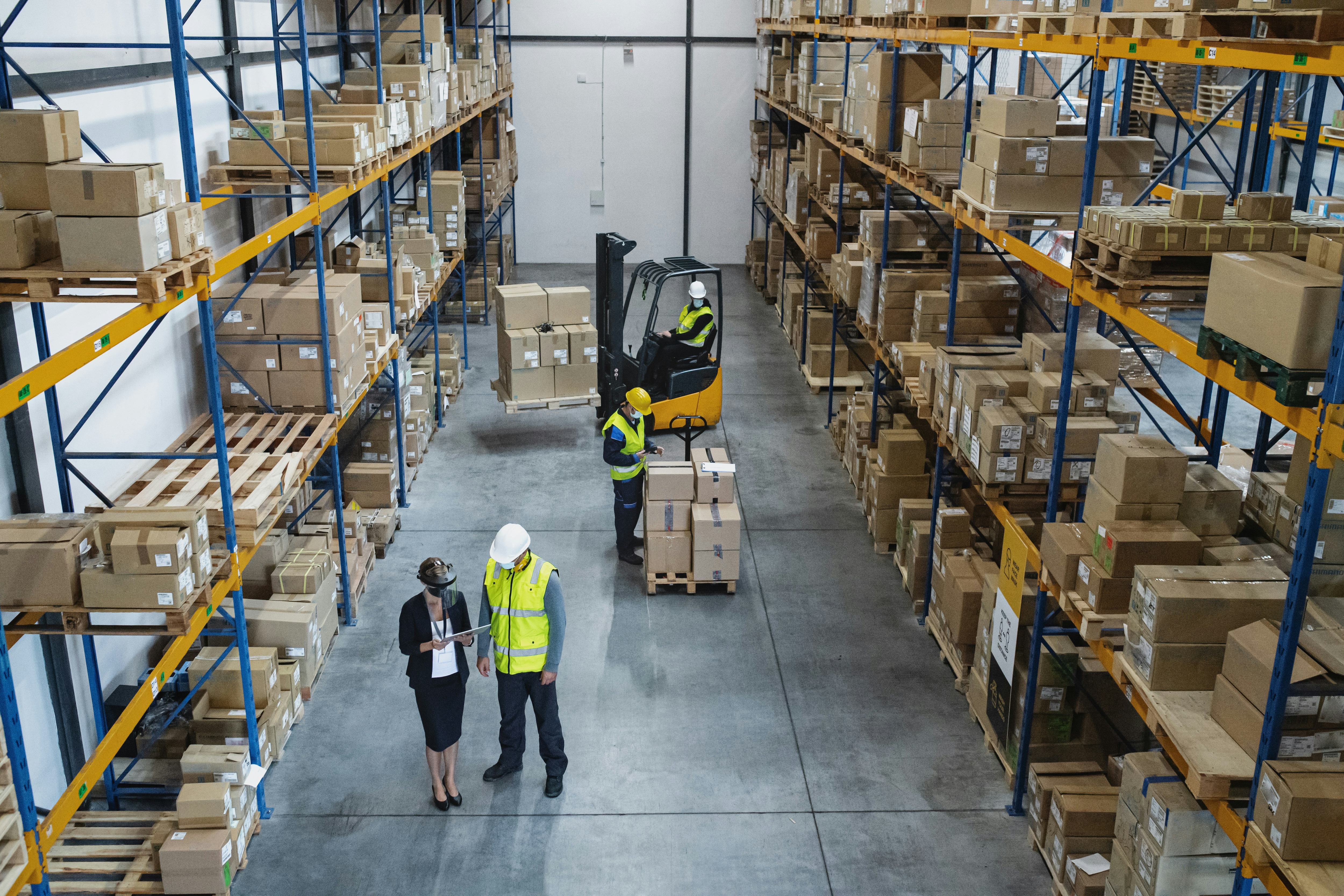
Forklift–Pedestrian Safety Checklist
- ☐ Pedestrian walkways exist and match real “desire lines.”
- ☐ Crossings are clearly marked, limited, and protected (gates/barriers where possible).
- ☐ Blind corners have mirrors + stop controls + “horn” reminders.
- ☐ Speed limits are posted and enforced (especially intersections/docks).
- ☐ Lighting is adequate in shared-traffic areas.
- ☐ Hi-vis PPE is required for pedestrians in forklift zones.
- ☐ Both operators and pedestrians are trained and refreshed regularly.
- ☐ Near-misses are logged and converted into layout/procedure improvements.
Conclusion: Design Out the Interaction First
Forklift–pedestrian incidents are rarely random. They cluster at predictable points: intersections, blind corners, dock doors, staging zones, and narrow aisles. The strongest programs reduce risk by design: separation, speed control, visibility, and consistent rules—then reinforce them with training, enforcement, and targeted technology.
If you want a fast improvement plan, start with your top 3 hotspots and implement physical separation and visibility upgrades before adding more policies. Your operators and pedestrians will feel the difference immediately—because the layout will guide safe behavior.
Build a safer traffic system in your facility: Browse 4Dock safety essentials: Safety Products · Floor Signs · Traffic Safety · PPE
References (for further reading)
- OSHA eTool: Powered Industrial Trucks — Pedestrian Traffic: osha.gov
- OSHA eTool: Operating the Forklift — Traveling & Maneuvering: osha.gov
- OSHA Standard 29 CFR 1910.178 — Powered Industrial Trucks: osha.gov
- NIOSH Alert (2001-109): Workers Who Operate or Work Near Forklifts: cdc.gov
- HSE Guidance: Separating Pedestrians and Vehicles: hse.gov.uk
- ITSDF (B56 Standards overview): itsdf.org
Compliance note: This article is for general information and does not replace site-specific risk assessment, local regulations, or professional safety advice.
Always follow applicable OSHA requirements and manufacturer instructions for your equipment and facility.