


Gun Workbench Buying Guide for Gunsmiths and Home Workshops
If you spend time on firearms forums or Reddit threads, you’ll see the same frustration come up again and again: “My bench wobbles.” “It’s not deep enough for rifles.” “I should’ve bought a better workbench the first time.”
This guide is written for gunsmiths and serious firearm hobbyists who want practical, no-nonsense advice—especially if you’re setting up your first dedicated gun workbench or planning to upgrade from a general garage bench. The goal isn’t to repeat problems you already know, but to give you clear rules so you can choose a bench that actually works for how you build, repair, and maintain firearms.
How Gunsmiths Actually Use a Gun Workbench
Before talking about features or products, it helps to look at how a gun workbench is used in real life. Most gunsmith and hobbyist setups involve:
- Disassembly and cleaning
- Barrel installation and torque work
- Mounting optics and accessories
- Vise-based operations
- Long build or tuning sessions that last hours
These tasks place very different demands on a workbench than light DIY or woodworking projects. Stability, depth, and working height matter far more than appearance or branding.
What Actually Matters in a Gun Workbench
1. Stability Comes First
The number one complaint from gunsmiths is bench movement during torque work. If your bench shifts when tightening a barrel or applying force, it’s not just annoying—it’s unsafe.
A simple rule: if you have to brace the bench with your body, the bench isn’t stable enough. True stability comes from a rigid steel frame and solid leg structure, not from adding weight later or bolting the bench to the wall as a workaround.
2. Load Capacity Is About Force, Not the Gun’s Weight
Many people underestimate load capacity because firearms themselves are relatively light. The real load comes from the vise, clamping pressure, and body weight applied during torque operations.
For most gunsmith and serious hobbyist setups, a workbench rated in the 800–1500 lb range is a safe starting point. Benches below that range may feel acceptable at first, but often flex or loosen over time under repeated force.
3. Surface Size Matters More Than You Think
Rifle work exposes one of the most common buying mistakes: a bench that’s too shallow.
When the bench doesn’t have enough depth, long components overhang the edge, clamps lose leverage, and stability suffers. Many gunsmiths find 36 inches of depth to be a practical minimum for rifle work. Longer surfaces also make it easier to keep tools and parts organized without crowding your workspace.
4. Height and Ergonomics Affect Long Sessions
Gun work often involves long periods of focused, repetitive tasks. A bench that’s too high or too low leads to fatigue much faster than most people expect.
If you alternate between standing and seated work—or share the bench with others—adjustable height can make a real difference. For a deeper explanation of this topic, see our guide on ideal workbench height for standing vs. sitting tasks.
Do You Really Need a “Gunsmith Bench”?
Many products marketed as “gunsmith benches” are simply light-duty benches with a label attached. The name alone doesn’t guarantee stability, load capacity, or durability.
Instead of focusing on the label, evaluate the bench based on how it performs:
- Does it support a heavy vise without flex?
- Does it stay still under torque?
- Is the surface deep enough for rifle work?
- Can you work comfortably for hours at a time?
A heavy-duty industrial workbench often outperforms a “gunsmith bench” simply because it’s built to handle real force.
Common Mistakes When Upgrading a Gun Workbench
Many gunsmiths upgrade more than once because of avoidable mistakes:
- Choosing a bench based on looks instead of structure
- Ignoring depth and focusing only on length
- Underestimating load capacity requirements
- Buying fixed-height benches that don’t match working posture
- Forgetting about future upgrades like vises or shelves
Most of these mistakes result in buying twice—something experienced gunsmiths try hard to avoid.
Example Workbench Choices from Gunsmith Setups Using 4Dock
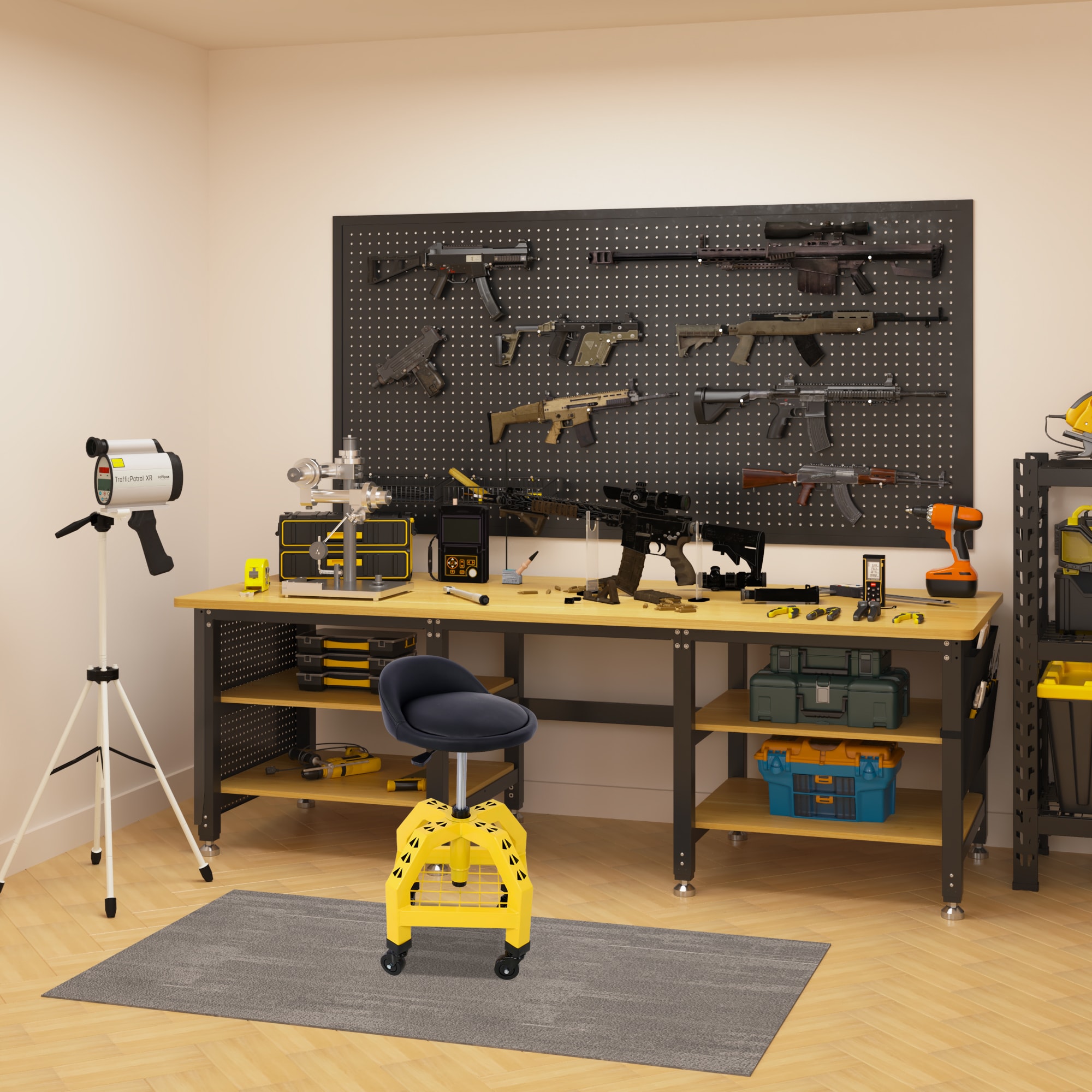
There is no single “perfect” gun workbench, but certain configurations are commonly chosen because they balance stability, size, and overall value.
High-Value, Heavy-Duty Option
The WB5 Heavy-Duty Industrial Classic Workbench (72" × 36") is often selected by gunsmiths who want maximum stability without overspending. Its depth supports rifle work, and the heavy-duty frame handles vise mounting and torque operations without wobble.
Workbench with Storage and Height Flexibility
For shops that alternate between standing and seated tasks—or want better organization—the Adjustable Industrial Workbench / Packing Table (90" × 36") with optional shelf provides a longer surface and built-in storage. This setup is commonly chosen by small shops handling varied repair and assembly work.
These examples are reference points, not prescriptions. The right choice depends on how you actually work.
Quick Decision Checklist for Choosing a Gun Workbench
- Does the bench remain stable under torque?
- Is the load rating sufficient for vise and force application?
- Is the surface deep enough for rifles?
- Is the working height comfortable for long sessions?
- Will the bench support future upgrades?
FAQ: Gun Workbench Basics
Do I need an adjustable-height gun workbench?Adjustable height is useful if you switch between standing and sitting or share the bench. For single-user setups, fixed height is often sufficient.
Is a garage workbench good enough for gunsmithing?Many garage benches lack the rigidity needed for torque and vise work. Stability should be the deciding factor.
How deep should a gun workbench be?For rifle work, many gunsmiths consider 36 inches of depth a practical minimum.
How much weight should a gun workbench support?For gunsmith and serious hobbyist use, 800–1500 lbs is a common safe range.
Conclusion
A good gun workbench isn’t about branding—it’s about how it performs under real use. By focusing on stability, load capacity, surface size, and ergonomics, you can stop guessing and choose a bench that supports safe, comfortable, and precise gun work for years to come.