


Forklifts (powered industrial trucks) are essential in warehouses and factories—but they’re also involved in some of the most serious “struck-by” and “caught-between” incidents on the floor.
The good news: most forklift incidents are preventable with the right mix of training, traffic design, equipment checks, and daily operating discipline.
OSHA’s powered industrial truck standard (29 CFR 1910.178) sets the baseline for safe operation, maintenance, and training.
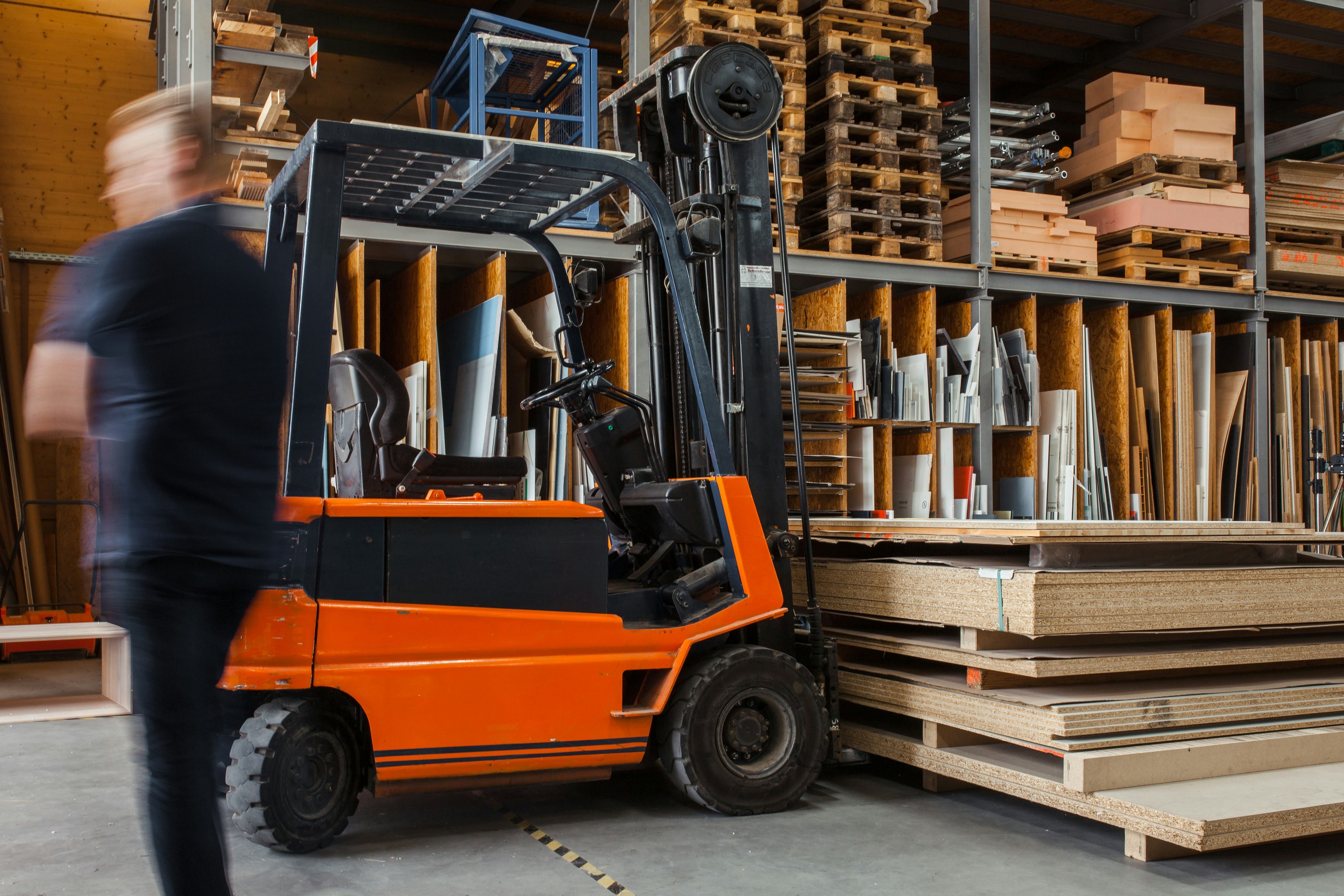
Common Forklift Hazards in Warehouses
1) Striking pedestrians
This is one of the highest-risk scenarios: a forklift and a person share the same aisle, corner, doorway, or staging area—often with limited visibility. OSHA specifically highlights controls like warning pedestrians, maintaining safe clearance, and keeping people out of the fall zone of loads.
2) Tip-overs (especially with turns, ramps, uneven floors)
Tip-overs can happen when turning too fast, carrying a load too high, operating on slopes, or driving on uneven surfaces. The biggest prevention levers are speed control, load handling discipline, and route design.
3) Dropped or shifting loads
Loads can fall when:
- pallets are damaged,
- forks aren’t fully inserted,
- load is tilted or unstable,
- travel occurs with forks too high,
- operators stop suddenly or turn sharply.
OSHA’s powered industrial trucks guidance emphasizes controlling hazards and following safe procedures to prevent injuries and fatalities.
4) Poor maintenance or missed inspections
Worn forks, faulty lights/alarms, leaking hydraulics, or damaged tires can turn a normal task into an incident. OSHA’s standard includes requirements around safe use and maintenance of powered industrial trucks.
5) “Rushing” behaviors and shortcuts
Examples:
- riding the forks,
- driving with an elevated load,
- no horn at blind corners,
- turning without visibility/spotter,
- parking without securing the truck.
NIOSH has documented multiple fatal incidents involving workers operating or working near forklifts and emphasizes that proper procedures and safeguards prevent deaths.
Forklift Safety Rules That Prevent Most Incidents
Operate like you have limited visibility (because you do)
- Slow down at intersections, doorways, and congested zones
- Use horn / warning signals when approaching blind corners
- Keep a safe stopping distance and avoid sudden turns
OSHA’s pedestrian-traffic guidance explicitly calls out warning pedestrians and maintaining safe clearance.
Keep loads stable and low while traveling
- Fully insert forks under pallets
- Keep the load low while moving
- Avoid sharp turns and sudden braking
Park and secure the forklift properly
- Lower forks to the ground
- Neutralize controls, set parking brake
- Remove key (or follow site policy)
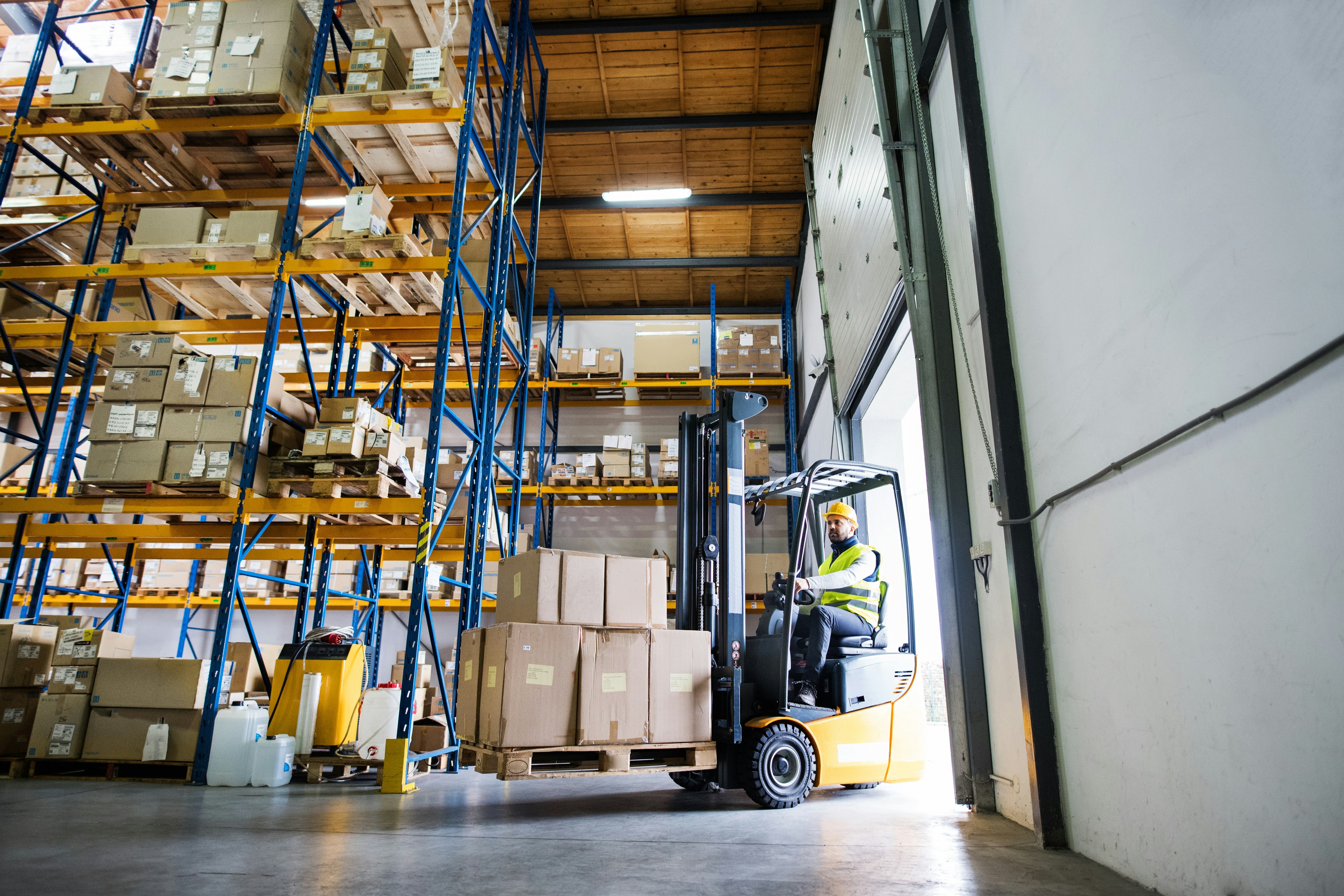
Pedestrian Safety and Traffic Control
If your warehouse has forklifts, you need a traffic plan, not just “be careful.”
Separate people and forklifts whenever possible
Best practice hierarchy
- Physical separation (guardrails, barriers)
- Clearly marked walkways and forklift lanes
- One-way travel patterns and controlled crossings
- Administrative rules + enforcement
OSHA’s eTool emphasizes maintaining distance, warning pedestrians, and keeping employees out of the load-fall path.
Make “high-risk zones” obvious
Focus on:
- dock doors & staging lanes
- narrow aisles
- blind intersections
- battery charging / maintenance areas
- trash compactor zones
Pre-Operation Inspection Checklist (Fast + Effective)
A quick inspection before use helps catch preventable failures. OSHA’s standard covers safe use and maintenance requirements for powered industrial trucks.
Before each shift (sample checklist):
- Tires: damage / pressure / chunking
- Forks: cracks, bends, heel wear, locking pins
- Mast & chains: visible damage, proper tension
- Hydraulics: leaks, hoses, fluid levels
- Brakes & steering: responsive, no drift
- Horn / lights / backup alarm: functioning
- Seatbelt & operator restraint: working
- Load backrest & overhead guard: intact
(You can also build this into a daily digital checklist workflow; many safety programs do.)
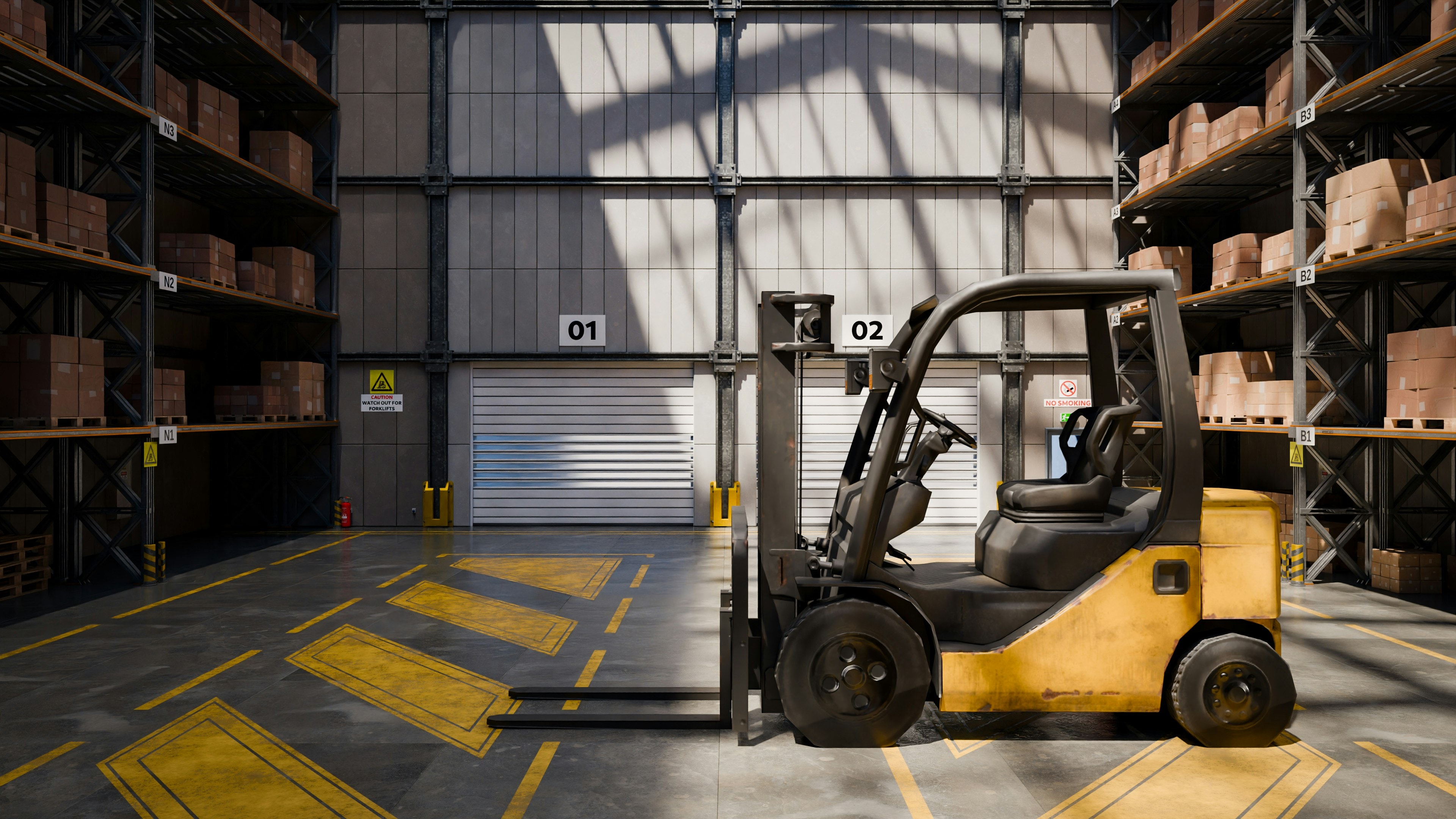
Training, Certification, and Refresher Requirements
OSHA requires that only trained and competent operators operate powered industrial trucks, and that operators be trained and certified by their organizations (29 CFR 1910.178(l)).
What good forklift training must cover
- The specific truck type(s) the operator will use
- Workplace-specific hazards (layout, pedestrians, docks, ramps)
- Safe operating procedures and load handling
- Evaluation + documented certification
When refresher training is needed
Refresher training/evaluation is typically triggered by:
- unsafe operation observed
- near-miss or incident
- new equipment type
- changed workplace conditions (new aisles, new racking, new traffic flows)
(Your training plan should match your site realities, not generic slides.)
Warehouse Design Tips to Reduce Forklift Risk
Even the best operators struggle in a poorly designed flow. These changes often reduce incidents fast:
1) Improve visibility
- Mirrors at blind corners
- Better lighting in aisles and doorways
- “Stop” markings at intersections
2) Reduce congestion at packing & staging
Staging that spills into travel lanes creates pedestrian conflict. Use:
- dedicated staging lanes
- defined pallet drop zones
- clear “no-storage” aisle rules
3) Create ergonomic work zones that keep people out of forklift lanes
Packing stations, benches, and material handling tools should be arranged so foot traffic doesn’t cut across forklift routes. This is one of the simplest ways to reduce pedestrian exposure.
Quick FAQ (AEO-friendly)
Do pedestrians always have the right of way around forklifts? In many facilities, the rule is “pedestrians first,” but the most important control is separation. OSHA guidance emphasizes warning pedestrians and maintaining safe clearance.
What OSHA standard applies to forklifts? OSHA’s powered industrial truck standard is 29 CFR 1910.178, which covers requirements related to use, maintenance, and other safety aspects.
Is forklift operator certification required? OSHA requires operators to be trained and certified by their organizations under 1910.178(l).
What’s the simplest way to reduce forklift accidents quickly? Start with (1) traffic separation, (2) daily inspections, and (3) enforced speed + intersection rules, then improve layout to remove conflict points. OSHA’s pedestrian-traffic guidance provides a solid baseline.
Need Help Planning a Safer Warehouse Setup?
Forklift safety improves dramatically when your warehouse is designed for clean flow—clear staging, defined travel lanes, and properly placed workstations that keep pedestrians out of forklift paths.
If you’re building a new warehouse, expanding, or trying to reduce forklift/pedestrian conflict in daily operations, contact 4Dock for practical warehouse setup support—from workstation layout recommendations to storage and material-handling planning.