


Forklift-Pedestrian Safety: Docks, Shipping and Receiving Areas. Shipping docks are a hazard point in most warehouses
In many warehouses, the loading dock is where productivity peaks—and where risk spikes. Forklifts move fast, trailers create visibility constraints, staging piles up, and pedestrians (dock staff, pickers, supervisors, truck drivers, visitors) cross paths in tight spaces. The result is a high-frequency “interaction zone” where near-misses and struck-by incidents can happen.
Traffic separation, Trailer blind spot,s Speed control, Visibility upgrade,s Dock-specific engineering,g Training for pedestrians
Core idea: Dock safety improves fastest when you design out forklift–pedestrian interactions (separation), then reinforce with visibility, clear rules, training, and engineering controls.
Why are docks high-risk zones for forklift–pedestrian incidents
1) Congestion & unpredictable movement. Shipping and receiving areas often combine forklifts, pallet jacks, staging pallets, dock plates/levelers, and multiple people moving between doors. When the layout is tight, “shortcuts” become normal—creating conflict points.
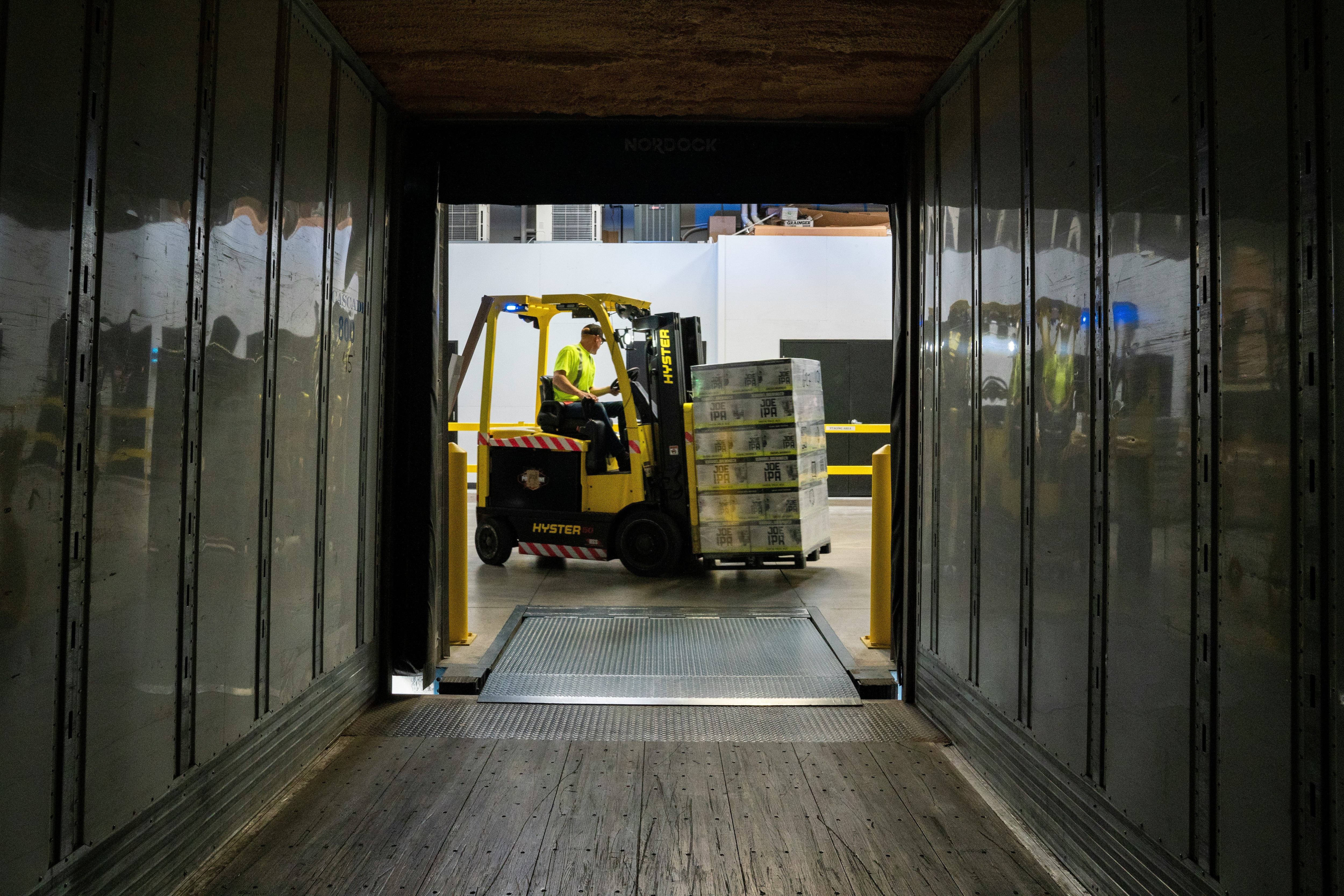
2) Trailer blind spots (a dock-specific hazard). A forklift entering or backing out of a trailer can temporarily reduce line-of-sight for both the operator and pedestrians nearby. This is one reason docks require stronger controls than standard aisles.
3) Mixed audiences (not everyone is trained). Truck drivers, visitors, and contractors may enter the dock area without the same “warehouse traffic” awareness as internal staff. Without defined walkways and rules, they may unknowingly step into forklift lanes.
4) Staging & clutter that blocks sightlines. Stretch wrap tails, pallet overhang, stacked cartons, and staged freight can create visual barriers and hide pedestrians at the worst locations: cross-aisles and door approaches.
1. Separate traffic wherever feasible (best ROI upgrade)
The most effective control is separation. If you can reduce “shared-space moments,” you reduce the number of opportunities for a mistake to become an incident.
What separation can look like at docks
- Dedicated pedestrian lanes with high-contrast floor markings (continuous lines, arrows, “NO FORKLIFTS” zones).
- Controlled crossings only at specific points (zebra pattern, stop bars, “LOOK” prompts).
- Physical barriers (guardrails/bollards) to prevent drifting into forklift lanes.
- Pedestrian gates that force a pause-and-look behavior before crossing.
- Door-level discipline: keep staging outside pedestrian routes; keep “walk space” clear at every door.
Quick start: Treat docks like a “mini roadway.” Mark the lanes, define crossings, then add barriers at the top 2–3 conflict points.
Browse safety essentials on 4Dock: Safety Products · Traffic Safety · PPE
2. Improve visibility & communication (especially near trailers)
Docks create “visibility traps” around trailers, door frames, stacked freight, and blind corners. Your goal is to make sure both sides can detect each other earlier—before they occupy the same space.
High-impact visibility upgrades
- Convex mirrors at cross-aisles, blind corners, and door approaches (clean + correctly angled).
- Better lighting at door thresholds and staging zones (eliminate shadow pockets).
- High-visibility PPE for anyone entering the dock area (vests/reflective garments).
- Visual warning aids (e.g., floor-projected lights) to signal approaching forklifts where noise is high.
- Reduce sightline blockers: keep staged freight below a set height near intersections; remove clutter from “decision zones.”
Dock tactic that works: Create a “clear zone” at each door—no staging or parking within a defined buffer—so pedestrians and operators can see each other before entry/exit from a trailer.
3. Enforce speed control & right-of-way rules (make it automatic)
Even at low speed, a loaded forklift may not stop as quickly as people expect. Around docks, speed control is non-negotiable. Pair rules with physical and visual cues so “safe speed” becomes the default behavior.
Rules that reduce dock incidents
- Slow zones at door approaches, crossings, and staging areas (post + paint + reinforce).
- Mandatory stop points at dock intersections and blind corners (stop bars + signage).
- Yield clarity: define when forklifts must stop for pedestrians, and how pedestrians should cross safely.
- No-pass / no-overtake rules in tight dock lanes to prevent surprise movements.
4. Train everyone who enters the dock area (not just forklift operators)
A common gap: operators are trained, but pedestrians are not. Dock pedestrians need simple, repeatable behaviors that work under pressure.
Pedestrian training essentials
- Use designated walkways; avoid cutting through staging and between dock doors.
- Pause at crossings and seek eye contact/acknowledgment before stepping into a forklift lane.
- Stay visible: hi-vis PPE, no walking behind forklifts, avoid trailer thresholds during forklift movement.
- Distraction control: no phones/headphones while walking in active dock zones.
Operator refresh topics that matter at docks
- Approach trailers and thresholds slowly; anticipate pedestrians emerging near door frames.
- Use horn/warnings at blind points; keep forks low and loads stable to reduce blocked forward view.
- Back out of trailers with extra caution; use a spotter when congestion is high or visibility is compromised.
5. Dock-specific engineering controls (layered protection)
Docks benefit from engineering controls because they address risk even when behavior slips. Consider adding:
Trailer securement systemsRestraints / securement procedures help prevent trailer movement while forklifts load/unload—reducing sudden hazards at the threshold. Dock status signalingVisual indicators (lights/signs) that communicate door status and movement can reduce surprise interactions and improve coordination. Pedestrian alert pointsAt the busiest crossings, consider pedestrian-activated warnings or controlled gates to signal forklift traffic before crossing. Speed zoning / detection aidsIn persistent hotspots, proximity aids and zone-based speed reduction can add a safety layer where separation is limited.
Dock forklift–pedestrian safety checklist
- ☐ Pedestrian routes are clearly marked and match real walking patterns.
- ☐ Crossings exist only where needed and are highly visible (stop bars / prompts).
- ☐ Physical barriers or gates protect the highest-traffic pedestrian zones.
- ☐ A “clear zone” buffer is enforced at each dock door (no staging blocking sightlines).
- ☐ Mirrors and lighting cover blind corners and door approaches.
- ☐ Dock slow zones are posted and reinforced with floor markings.
- ☐ Pedestrians in dock areas wear hi-vis PPE and follow distraction rules.
- ☐ Visitors/truck drivers follow a defined protocol (escort + designated walk path).
- ☐ Near-misses are logged and mapped to specific dock hotspots monthly.
Conclusion: Treat the dock like a controlled traffic system
Docks are where warehouse traffic becomes most complex—and that’s exactly why they deserve a dedicated safety design. Start by reducing interaction points through separation. Then add visibility upgrades, speed rules that are hard to ignore, training for everyone who enters the zone, and dock-specific engineering controls. The result is fewer near-misses, fewer delays, and a safer shipping/receiving workflow.
Build your dock safety kit: Shop Safety Products · Traffic Safety · PPE
If you want, we can tailor this into a dock-specific “Before vs After” improvement plan for your layout (Top 3 hotspots + fixes).
References & further reading
- Cisco-Eagle (2022): Forklift-Pedestrian Safety: Docks, Shipping and Receiving Areas Source
- OSHA eTool: Powered Industrial Trucks — Workplace: Loading Docks Source
- OSHA Standard: 29 CFR 1910.178 — Powered Industrial Trucks Source
- Safeopedia: Forklift Safety Near Loading Docks Source
Compliance note: This article is general information and does not replace a site-specific risk assessment, local regulations, OSHA requirements, or manufacturer instructions.