


Are Adjustable Workbenches Worth the Investment? A Practical Buyer’s Guide
If you’ve spent any time browsing Reddit, woodworking forums, or warehouse operations discussions, you’ve probably seen the same question come up again and again: are adjustable workbenches actually worth the investment?
Some users swear they’ll never go back to a fixed-height bench. Others admit they paid more, set the height once, and barely touched it again. With adjustable workbenches becoming more common in warehouses, workshops, and packing areas, the confusion is understandable.
The truth is simple: adjustable workbenches can be worth the investment—but only in the right situations. This guide breaks down what real users care about, when adjustability makes sense, and how to choose between manual, hand crank, and electric options without overpaying for features you don’t need.
What Users Actually Care About (Insights from Forums & Real Feedback)
Across forums like Reddit, Garage Journal, and industrial operations communities, discussions around adjustable workbenches tend to focus on a few consistent concerns—not marketing claims.
Cost vs. actual use is the biggest one. Many users ask whether the higher price is justified if they don’t plan to change the height often. A common comment is: “I adjusted it once and never touched it again.”
Stability is another frequent topic. Users worry that adjustable benches may wobble or feel less solid than fixed-height or heavy-duty tables, especially under load.
Ease of adjustment also matters. Some people want quick, push-button changes. Others are perfectly fine with slower adjustments if it means better durability or lower cost.
Finally, multi-user environments come up repeatedly. In shared workspaces, warehouses, or packing stations, adjustability becomes less of a luxury and more of a practical necessity.
Understanding these concerns is key to deciding whether adjustable workbenches are worth the investment for you.
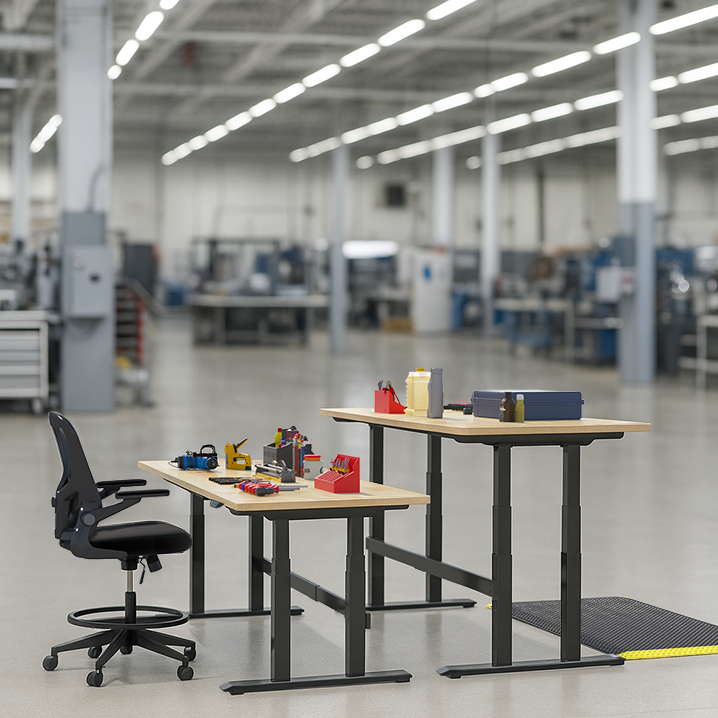
When Adjustable Workbenches Are NOT Worth the Investment
Despite the hype, adjustable workbenches aren’t always the best choice. If your workbench supports a single task, is used by one person, at one consistent height, adjustability may offer little real benefit.
For heavy-duty tasks where maximum stability is critical—such as constant downward force or high static loads—a fixed-height or manually set bench often feels more solid and costs less.
In these cases, paying extra for electric motors or frequent height adjustment doesn’t improve productivity. A simple, stable setup usually wins.
When Adjustable Workbenches ARE Worth It
On the other hand, there are scenarios where adjustable workbenches clearly earn their keep.
Shared workstations are the most common example. When multiple people of different heights use the same bench, adjustability prevents awkward posture, shoulder strain, and unnecessary fatigue.
Mixed tasks also benefit. Packing, sorting, inspection, and light assembly often require different working heights. Being able to fine-tune the surface—even once per shift—can make a noticeable difference in comfort.
Sit-stand workflows are another driver. In environments where workers alternate between sitting and standing, adjustable benches support better posture without forcing compromise.
Many forum users also point out that adjustability only delivers value when the bench is set to the right height for the task. Factors such as whether work is performed sitting or standing, task precision, and reach requirements all influence comfort. If you want a deeper explanation, we’ve covered this topic in detail in our guide on how to determine the ideal workbench height for standing and sitting tasks across different industries.
Three Types of Adjustable Workbenches: What’s the Difference?
Manual Repositioning (Pin-Set Height Adjustment)
Manual height-adjustable benches use preset height positions that require physically repositioning the legs or pins. These are ideal for operations that need high load capacity and infrequent adjustment.
Once set, they behave much like a fixed-height bench—stable, reliable, and cost-effective. They’re commonly used in packing and warehouse environments where height changes happen only during setup or reconfiguration.
Learn more about manual height-adjustable packing tables.
Hand Crank Adjustable Workbenches
Hand crank workbenches sit in the middle ground. Height is adjusted mechanically using a crank, without electricity.
Forum users often describe these as “slower, but dependable.” They’re well suited for environments where adjustments happen occasionally, but not constantly.
See an example of a hand crank adjustable workbench.
Electric Height Adjustable Workbenches
Electric adjustable workbenches offer the most flexibility. With push-button controls, height changes are quick and effortless, making them ideal for high-frequency adjustments, multi-user stations, or sit-stand workflows.
When height is adjusted multiple times per shift, electric benches often justify the investment through efficiency and ease of use.
Explore electric adjustable height workbenches.
Cost vs. Value: What Are You Really Paying For?
One of the biggest misconceptions is that you’re paying simply for “up and down” movement.
In reality, the cost difference reflects engineering, load capacity, and durability. Adjustable benches require stronger frames, reinforced legs, and mechanisms designed to stay stable across multiple heights.
You’re also paying for flexibility over time. As workflows change, adjustable benches reduce the need to replace or rebuild entire workstations.
When viewed this way, the investment isn’t just about comfort—it’s about adaptability.
Quick FAQ: Real Questions from Forums
Are adjustable workbenches really worth the extra cost?
They are worth it when adjustability solves a real problem, such as shared workstations, mixed tasks, or sit-stand workflows. If height rarely changes, many users feel a simpler bench would have been enough.
Do adjustable workbenches wobble?
Stability depends more on design and load rating than adjustability itself. Heavy-duty manual benches are typically the most rigid, while well-built electric and hand crank models remain stable when used within rated limits.
How much weight can adjustable workbenches support?
Based on typical market ranges and 4Dock specifications:
- Manual pin-set packing tables: up to 3,000 lbs, typically with 30"–36" height ranges.
- Electric adjustable workbenches: commonly 300–500 lbs, with select models rated up to 700 lbs and height ranges around 24"–49".
- Hand crank workbenches: typically around 500 lbs, with adjustment ranges of approximately 26"–40".
What’s the most common buying mistake?
Paying for adjustability without understanding how often it will actually be used. Clarifying users, tasks, and load requirements upfront usually leads to a better decision.
Final Verdict: Are Adjustable Workbenches Worth It for You?
There’s no universal answer. If your bench is used by one person, for one task, at one height, adjustability may not be worth the extra cost.
If your workstation supports multiple users, changing tasks, or sit-stand work, adjustable workbenches often pay for themselves in comfort and flexibility.
The smartest approach is to start with how often you’ll actually adjust the height, how many people use the bench, and how critical ergonomics are in your operation. When adjustability solves a real problem, it’s absolutely worth the investment.